What is Lyme Disease?
Lyme disease is caused by bacteria spread by infected deer ticks. Both people and animals can be infected with Lyme disease. Lyme disease can be serious if untreated,
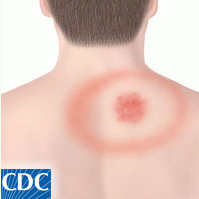
but it is not fatal. If you have possibly been exposed to ticks between May and early autumn, and you develop Lyme disease symptoms, especially a bullseye or doughnut-shaped rash, see a doctor right away.
Early treatment can prevent later problems.
What are the symptoms of Lyme Disease?
Early stage: An early symptom of Lyme disease is usually, but not always, a rash where the tick was attached.
Often the tick isn't even noticed, and it drops off before the rash appears. The rash first appears anywhere from three days to a month after the bite. It starts as a small red area then spreads, often clearing in
the center to look like a doughnut or ring. (About one in five people never develop this distinctive rash.) Other skin signs can include burning or itching, hives, redness of the cheeks and under the eyes,
and swollen eyelids with bloodshot eyes. Flu-like symptoms such as fever,
headache, muscles aches, fatigue and swollen glands are also common. The symptoms often go away by themselves after a few weeks, but
the person remains infected. Without medical treatment, the rash returns in about half of infected people, appearing in other places on their bodies, followed by more serious problems later. Treatment with
antibiotics clears up the rash within days and often prevents later problems.
Later stages: Four to six weeks (or even later) after the tick bite, symptoms develop in the joints, nervous system or heart. About 60% of people with untreated Lyme disease develop arthritis in their large joints – usually knees, elbows and wrists. About 10% to 20% of people who don't get treatment develop nervous system problems, including severe headache and stiff neck, facial paralysis or palsy, and weakness or pain in the hands, arms, feet or legs. Heart palpitations, arrhythmias, and cognitive difficulties such as memory problems are also possible.
Where is Lyme Disease found?
Lyme disease can be found all over the United States, but it is most common along the East Coast, the Great Lakes, and the Pacific Northwest. In Massachusetts,
deer ticks are most often found in the coastal areas, the islands and the Connecticut River Valley in the western part of the state. The disease is most likely to be spread between late May and early autumn, when ticks are
most active. Very few cases have been reported in Mississippi, but it can be acquired by travel to areas where Lyme disease is prevalent.
How is Lyme Disease prevented?
The best ways to prevent Lyme disease are to know where the deer ticks are found, avoid these places, and promptly remove the tick if you do get bitten.
If you live in or visit a high-risk area, follow these tips:
- Don't walk bare-legged in tall grass, woods, or dunes where ticks may live.
- If you do walk in these places, wear a long-sleeved shirt, long pants, high socks (with pants tucked tightly into the socks), and sneakers.
- Light colors will help you spot the ticks on your clothes before they reach your skin.
- Use insect repellents that contain DEET on your clothes or exposed skin, or those that contain permethrin on your clothes.
- Read labels carefully. Use products with no more than 10% DEET on children and no more than 30-35% DEET on adults.
- Wash skin thoroughly after returning indoors. Rare but serious reactions to repellents can occur.
- Check for ticks every day. Their favorite places are on the legs, thighs, groin, in the armpits, along the hairline, and in or behind the ears. The ticks are tiny, so look for new freckles.
How can I remove a tick?
Use tweezers to grip the tick firmly, close to the skin and pull it straight out. If you must use your fingers, protect your fingertips with a plastic bag
or a tissue and wash your hands afterward. Put antiseptic on the bite. Drown the tick in alcohol.
For More Information
- Lyme disease information from the CDC
- Continuing education for healthcare professionals
- Contact the Mississippi State Department of Health at 601-576-7725.