During certain types of emergency, such as chemical accidents or natural disasters, staying put may be dangerous. In such cases, it may be safer for you to leave the immediate area or evacuate to an emergency shelter.
How to know if you need to evacuate
Local emergency officials, such as the police or emergency management will make public announcements on the radio or television if there is a need to evacuate.
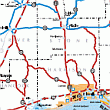
Evacuation Guides
Maps, contraflow plans, and other evacuation planning information from the Mississippi Department of Transportation
The Department of Homeland Security (DHS) replaced the color-coded alerts of the Homeland Security Advisory System (HSAS) with the National Terrorism Advisory System (NTAS), designed to more effectively communicate information about terrorist threats by providing timely, detailed information to the American public. DHS will announce the advisories publicly. All advisories will be simultaneously posted at DHS.gov, and released to the media for distribution. DHS will also distribute advisories across its social media channels, including Twitter and Facebook.
What to do
Act quickly and follow the instructions of local emergency management. Every situation can be different, so local coordinators will give you special instructions to follow for a particular situation.
Local emergency management may direct people to evacuate homes or offices and go to an emergency shelter. If so, emergency managers will tell you how to get to the shelter.
If you have children in school, they may be sheltered at the school. You should not try to get to the school if the children are being sheltered there.
If you choose to bring your pets, understand they may not be allowed in emergency shelters. Plan how you will care for your pets and bring extra food, water, and supplies for them. To learn more about caring for your pets during an emergency, visit the Pets and Disasters webpage.
Have a "Go Bag" prepared to bring with you to the emergency shelter. Your supplies should be in an easy-to-carry backpack or duffel bag and can include:
- Battery-operated radio and flashlight, with new batteries for each
- Contact and meeting place information for your household
- Cash (at least $50-$100 in small bills) and ATM cards
- Extra set of house and car keys
- Copies of important personal documents (insurance cards, birth certificates, marriage license, social security cards, proof of residence, tax records, deeds, wills, and photo IDs) in a waterproof, portable container
- Bottled water and non-perishable food (granola and energy bars)
- First-aid kit
- Sleeping bags
- Sturdy shoes, lightweight rain gear, hat and gloves
- Prescription medications (a week's supply)
- Personal hygiene supplies
- Child care supplies or other special care items
- Maps
Plan to bring any special items you, or anyone in your care, might need.
Visit the Disaster Supply Kit webpage for more information on preparing for an emergency.
Plan Ahead
If you have time, call a friend or relative in another state to tell them where you are going and that you are safe. Local telephone lines may be jammed in an emergency, so you should plan ahead to have an out-of-state contact with whom to leave messages.
If you do not have private transportation, make plans in advance of an emergency to identify people who can give you a ride.
Evacuating and sheltering in this way should keep you safer than if you stayed at home or at your workplace. Emergency managers will let you know when it is safe to leave the shelter.